

DATE : 02/11/2026
AUTHOR : AIMS
Get Instant Call Back
Table of Contents
- 1. Introduction
- 2. Understanding Stroke and Its Effects
- 3. Why Is Physiotherapy Important After a Stroke?
- 4. How Physiotherapy Helps Stroke Patients Regain Independence
- 5. Common Physiotherapy Techniques for Stroke Rehabilitation
- 6. When Should Stroke Rehabilitation Begin?
- 7. Stroke Care at AIMS Hospital, Dombivli
- 8. Tips for Supporting Stroke Recovery at Home
- 9. Frequently Asked Questions
- 10. Conclusion
1. Introduction
A stroke can significantly affect a person's ability to walk, maintain balance, move their arms and legs, and perform everyday activities. Simple tasks such as dressing, eating, bathing, or getting out of bed may become challenging. However, with timely medical care and a structured rehabilitation plan, many stroke survivors can improve their mobility and work towards regaining independence.
Physiotherapy plays an important role in stroke recovery by helping patients improve muscle strength, coordination, balance, and movement. Through personalised exercises and regular rehabilitation sessions, patients can gradually develop the skills needed to manage daily activities more safely.
At AIMS Hospital, Dombivli, stroke-related medical care may involve specialists such as a neurophysician and a neurosurgeon, depending on the patient's condition and treatment requirements. Appropriate medical management, followed by a personalised rehabilitation plan, can help patients work towards better functional recovery.
2. Understanding Stroke and Its Effects
A stroke occurs when the blood supply to a part of the brain is interrupted or when bleeding damages brain tissue. Since the brain controls movement, sensation, balance, speech, and other essential functions, a stroke can affect people differently.
Common effects of a stroke include:
- Muscle weakness: Reduced strength in one arm, one leg, or one side of the body.
- Difficulty walking: Problems with balance, coordination, and movement.
- Muscle stiffness: Increased muscle tightness that restricts normal movement.
- Reduced coordination: Difficulty controlling movements or maintaining a stable posture.
- Challenges with daily activities: Difficulty dressing, bathing, eating, or moving independently.
- Fatigue: Feeling tired during physical activities or rehabilitation.
The severity of these effects depends on the part of the brain affected, the extent of the injury, and the patient's overall health. Early medical assessment and an appropriate treatment plan are important for managing these challenges.
3. Why Is Physiotherapy Important After a Stroke?
Physiotherapy helps stroke survivors practise movements and improve physical abilities through structured, repetitive, and goal-oriented exercises. It supports neuroplasticity, the brain's ability to reorganise and form new connections that may help with learning and recovering movement.
A physiotherapist assesses muscle strength, joint mobility, balance, posture, walking ability, and functional limitations before developing an individualised rehabilitation programme.
The benefits of physiotherapy after a stroke may include:
- Improving muscle strength and joint flexibility.
- Supporting balance, posture, and coordination.
- Helping patients practise standing, transferring, and walking.
- Reducing the risk of falls through balance and mobility training.
- Helping prevent complications associated with prolonged immobility.
- Building confidence in performing everyday activities.
- Supporting a gradual return to greater independence.
Recovery varies from person to person. Physiotherapy goals should be realistic and adjusted according to the patient's progress and medical condition.
4. How Physiotherapy Helps Stroke Patients Regain Independence
Physiotherapy focuses on functional movements that patients need for everyday life. A personalised rehabilitation programme may include the following approaches.
Improving Mobility and Walking
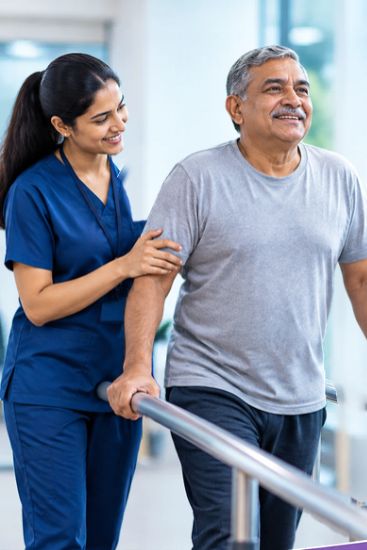
Stroke survivors may experience weakness, poor balance, or difficulty coordinating their leg movements. Physiotherapists may use supported standing, walking practice, weight-shifting activities, and gait training to improve mobility.
These exercises help patients practise moving safely and may support greater independence at home and in the community.
Restoring Muscle Strength
Muscle weakness can make even simple movements difficult. Appropriate strengthening exercises help patients improve control and develop the strength needed for sitting, standing, and transferring between surfaces.
Exercises are introduced gradually according to the patient's abilities and tolerance.
Improving Balance and Coordination
Balance problems can increase the risk of falls. Physiotherapy may include supervised sitting and standing exercises, controlled weight shifting, and coordination training.
These activities help patients practise maintaining stability during everyday movements.
Managing Muscle Stiffness
Some stroke survivors develop spasticity, a condition in which muscles become unusually tight. Positioning, stretching, supported movement, and other individually selected interventions may help manage stiffness and maintain joint mobility.
Patients with significant stiffness may also require additional medical assessment and treatment.
Practising Everyday Activities
Physiotherapists help patients practise functional movements such as getting out of bed, standing up from a chair, and moving safely between locations.
Occupational therapists may provide additional support with activities such as dressing, bathing, eating, and using household objects.
5. Common Physiotherapy Techniques for Stroke Rehabilitation
Stroke rehabilitation is tailored to the patient's needs, abilities, and stage of recovery. Common physiotherapy techniques include:
- Range-of-motion exercises: Help maintain joint flexibility and comfortable movement.
- Strengthening exercises: Support muscle strength and functional movement.
- Balance training: Helps patients practise stability while sitting, standing, and moving.
- Gait training: Focuses on walking patterns, coordination, and safe mobility.
- Task-specific training: Involves practising useful movements repeatedly, such as standing up from a chair.
- Functional electrical stimulation: May help activate selected muscles in suitable patients.
- Assistive device training: Teaches patients to use walking aids and other equipment safely when needed.
The physiotherapist selects techniques based on a professional assessment. Patients should not attempt difficult exercises independently if they have significant weakness, dizziness, or balance difficulties.
6. When Should Stroke Rehabilitation Begin?
Stroke rehabilitation should be considered as soon as the patient is medically stable and the treating team confirms that rehabilitation is safe. The timing and intensity depend on the type and severity of the stroke and the patient's overall health.
Early rehabilitation, when appropriate, can help patients begin practising movement and reduce complications associated with prolonged immobility. However, intensive mobilisation is not suitable for every patient immediately after a stroke. The treating medical team must determine the safest approach.
Recovery may continue for months or longer. Regular therapy, prescribed home exercises, and follow-up assessments help patients work towards their recovery goals.
7. Stroke Care at AIMS Hospital, Dombivli
Stroke care requires timely medical assessment, appropriate treatment, and rehabilitation planning. Depending on the type of stroke and the patient's condition, a neurophysician or neurosurgeon may be involved in diagnosis, treatment decisions, and ongoing management.
At AIMS Hospital, Dombivli, patients can consult the following specialists for stroke-related neurological and surgical assessment.
Dr. Rahul Jankar – Neurophysician
A neurophysician specialises in neurological conditions affecting the brain, spinal cord, and nervous system. In stroke care, a neurophysician can assess neurological symptoms, help guide medical management, and advise on appropriate follow-up and rehabilitation needs.
Dr. Ravi B. Sangle – Neurosurgeon
A neurosurgeon specialises in the surgical management of conditions affecting the brain, spine, and nervous system. Depending on the type of stroke and clinical findings, neurosurgical assessment may be required for selected patients.
The need for either specialist depends on the patient's diagnosis and individual treatment requirements. Physiotherapy and other rehabilitation services may form part of the recovery plan when recommended by the treating team.
Important: If you or a loved one experiences sudden facial drooping, weakness in an arm or leg, difficulty speaking, or sudden loss of balance, seek emergency medical care immediately. Do not wait for a routine appointment.
8. Tips for Supporting Stroke Recovery at Home
Family members and caregivers play an important role in supporting stroke rehabilitation. A safe environment, encouragement, and consistent follow-up can help patients participate in their recovery programme.
Helpful tips include:
- Follow the physiotherapist's recommended exercise plan.
- Keep walking areas clear and remove loose rugs or other tripping hazards.
- Install grab bars and other recommended safety equipment where necessary.
- Provide appropriate supervision during walking and transfers.
- Allow adequate rest between activities.
- Follow medical advice about nutrition, hydration, and prescribed medication.
- Attend scheduled rehabilitation sessions and medical follow-ups.
- Recognise small improvements and encourage realistic recovery goals.
Caregivers should learn safe transfer techniques from the rehabilitation team and avoid pulling the patient by the affected arm.
9. Frequently Asked Questions
1. Can physiotherapy help patients recover after a stroke?
Yes. Physiotherapy can improve strength, balance, coordination, and mobility. The extent of recovery varies between individuals.
2. When should physiotherapy start after a stroke?
Rehabilitation can begin when the patient is medically stable and the treating team confirms that it is safe.
3. How long does stroke rehabilitation take?
Recovery may take weeks, months, or longer, depending on the severity of the stroke and the patient's progress.
4. Can a stroke patient walk again with physiotherapy?
Some patients regain walking ability or improve their mobility with rehabilitation. Outcomes depend on the extent of the stroke and individual health factors.
5. Which doctor should a stroke patient consult?
A neurophysician can assess and manage many stroke-related neurological conditions. A neurosurgeon may be required in selected cases. The treating team can recommend physiotherapy and other rehabilitation services as appropriate.
10. Conclusion
Stroke recovery is a gradual process that requires appropriate medical care, structured rehabilitation, and consistent support. Physiotherapy plays an important role in improving muscle strength, balance, coordination, and mobility while helping patients practise the movements needed for everyday activities.
With an individualised rehabilitation plan and guidance from qualified healthcare professionals, stroke survivors can work towards greater independence and a better quality of life.
At AIMS Hospital, Dombivli, Dr. Rahul Jankar, Neurophysician, and Dr. Ravi B. Sangle, Neurosurgeon, are the specialists identified for stroke-related neurological and neurosurgical assessment. Patients should seek appropriate medical evaluation to understand their condition and determine the next steps in treatment and rehabilitation.
ABOUT US
About AIMSDirector's Message
Vision & Mission
Accreditations
Awards & Accolades
Our Network
Phone Directory
Scan/Click For Location



Designed by Web Creations 2022. All rights reserved.
Leave a Comment