



DATE : 07/11/2026
AUTHOR :
Get Instant Call Back
Table of Contents
- 1. Introduction
- 2. What Is Occupational Therapy for Children?
- 3. Importance of Occupational Therapy for Children
- 4. How Occupational Therapy Improves Motor Skills
- 5. Occupational Therapy for Focus and Attention
- 6. Developing Independence in Daily Activities
- 7. Activities Used in Pediatric Occupational Therapy
- 8. Signs Your Child May Need Occupational Therapy
- 9. How Parents Can Support Children at Home
- 10. Expert Guidance at AIMS Hospital, Dombivli
- 11. Frequently Asked Questions
- 12. Conclusion
1. Introduction
Every child develops at their own pace. While some children learn to write, dress themselves, follow instructions and participate in school activities easily, others may need additional support to develop these essential skills.
Occupational therapy helps children improve motor skills, coordination, focus and independence through structured, engaging and age-appropriate activities. It supports children in performing everyday tasks more confidently at home, school and in social environments.
With appropriate assessment and personalised guidance, occupational therapy can help children develop essential life skills, overcome everyday challenges and participate more comfortably in their daily routines.
2. What Is Occupational Therapy for Children?
Occupational therapy for children, also known as pediatric occupational therapy, is a specialised therapy that helps children develop the physical, sensory and functional skills required for everyday activities.
These activities include eating, dressing, writing, playing, learning and maintaining personal hygiene. When a child experiences difficulties performing these tasks, an occupational therapist can assess their needs and recommend suitable therapeutic activities.
Pediatric occupational therapy may help children with:
- Fine motor skills and hand coordination.
- Hand-eye coordination and visual perception.
- Attention and task completion.
- Sensory processing difficulties.
- Handwriting and classroom activities.
- Daily living skills and independence.
The therapy plan is designed according to each child's developmental needs, abilities and individual goals.
3. Importance of Occupational Therapy for Children
Everyday activities require children to use multiple skills together. For example, writing requires hand control, visual coordination, posture and concentration. Similarly, dressing involves movement planning, coordination and the ability to manage buttons and zips.
Children who experience difficulties with these activities may benefit from occupational therapy.
Occupational therapy may support children experiencing developmental delays, coordination difficulties, sensory processing challenges, autism spectrum disorder, cerebral palsy or difficulties with everyday self-care and school activities.
The benefits may include:
- Improved fine motor skills and coordination.
- Better participation in school activities.
- Greater independence in daily routines.
- Improved confidence while learning new tasks.
- Better participation in play and social activities.
- Development of practical problem-solving skills.
Early assessment can help parents understand their child's needs and explore appropriate support.
4. How Occupational Therapy Improves Motor Skills
Motor skills help children control their movements and complete everyday activities. Occupational therapy focuses on developing the skills needed for tasks such as writing, drawing, eating and playing.
Fine Motor Skills
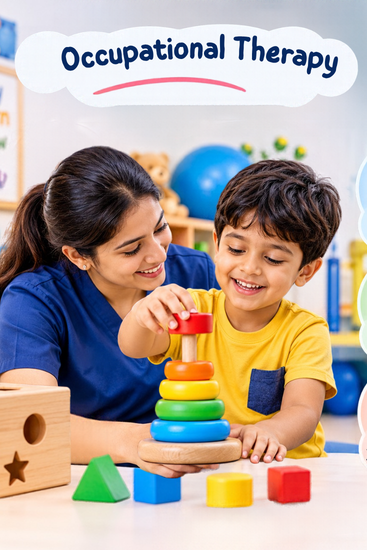
Fine motor skills involve small movements of the hands and fingers. These skills are important for holding a pencil, drawing, using child-safe tools, buttoning clothes and handling eating utensils.
Occupational therapists may use activities such as drawing, colouring, puzzles, building blocks and playdough exercises to help children practise hand control, finger movements and coordination.
Gross Motor Coordination
Gross motor skills involve larger body movements, balance and coordination. Depending on the child's needs, therapy activities may include reaching exercises, movement-based games and age-appropriate obstacle courses.
These activities can help children practise body awareness, coordinated movement and participation in play. Children who require additional support with mobility or balance may also benefit from physiotherapy, depending on professional assessment.
5. Occupational Therapy for Focus and Attention
Focus and attention are important for learning, following instructions and completing everyday tasks. Some children may find it difficult to remain engaged in activities, manage distractions or transition between tasks.
Occupational therapy can help children practise attention-related skills through structured activities and appropriate environmental strategies.
Some approaches include:
- Breaking larger tasks into smaller, manageable steps.
- Using visual schedules and picture-based instructions.
- Introducing age-appropriate puzzles and problem-solving games.
- Establishing consistent daily routines.
- Recommending sensory strategies based on the child's individual needs.
These approaches may help children participate more comfortably in learning and daily activities. However, persistent attention difficulties may require further assessment by a paediatrician or another appropriate specialist.
6. Developing Independence in Daily Activities
One of the main goals of occupational therapy is to help children become more independent in everyday life. Practising daily tasks in smaller steps can help children develop confidence and functional skills.
Eating and Feeding: Children may practise using spoons, holding cups and managing utensils. Feeding difficulties may require specialised assessment.
Dressing and Personal Care: Practising buttons, zips, putting on shoes and brushing teeth can help children develop self-care skills.
Writing and School Activities: Activities may focus on pencil grip, handwriting, hand control and coordination required for classroom tasks.
Organisation and Daily Routines: Visual schedules and step-by-step instructions can help children organise their belongings and follow familiar routines.
Play and Social Participation: Structured games can provide opportunities to practise turn-taking, sharing, following rules and interacting with other children.
The aim is to help each child participate in daily activities according to their abilities and developmental needs.
7. Activities Used in Pediatric Occupational Therapy
Occupational therapists use different activities depending on the child's age, abilities and therapy goals.
Common activities include:
- Drawing and colouring: Help children practise pencil control and fine motor coordination.
- Building blocks: Encourage hand-eye coordination and problem-solving.
- Puzzles and matching games: Support visual perception and task engagement.
- Playdough activities: Provide opportunities to practise finger movements and hand strength.
- Dressing practice: Helps children develop self-care skills.
- Visual schedules: Support understanding of routines and task sequences.
- Movement-based games: Encourage body awareness and coordination.
Activities should be selected and adapted by a qualified occupational therapist according to the child's individual needs.
8. Signs Your Child May Need Occupational Therapy
Children develop at different rates, and occasional difficulties do not necessarily indicate a developmental concern. However, parents may consider seeking professional guidance if their child consistently struggles with:
- Holding a pencil or using classroom tools.
- Managing buttons, zips or eating utensils.
- Completing age-appropriate self-care activities.
- Hand-eye coordination and movement planning.
- Coping with certain sensory experiences.
- Following familiar routines.
- Participating in schoolwork or everyday play.
If these difficulties persist or interfere with the child's daily life, consult a paediatrician or qualified occupational therapist. A professional assessment can help identify the underlying challenges and determine whether therapy may be beneficial.
9. How Parents Can Support Children at Home
Parents and caregivers play an important role in helping children practise the skills they learn during therapy. Simple activities incorporated into daily routines can encourage learning without putting unnecessary pressure on the child.
Here are some practical suggestions:
- Encourage drawing, puzzles and age-appropriate games.
- Give children enough time to try dressing and eating independently.
- Break complicated instructions into smaller steps.
- Maintain consistent routines for meals, homework, play and sleep.
- Appreciate effort and celebrate small improvements.
- Follow the home activities recommended by the child's therapist.
Parents should avoid forcing activities that cause significant distress or discomfort. Discuss any concerns with the treating professional so the activities can be adapted appropriately.
10. Expert Guidance at AIMS Hospital, Dombivli
Understanding a child's developmental needs is an important step towards helping them develop essential life skills. Parents who notice persistent difficulties with motor skills, coordination, attention or independence should consider seeking professional guidance.
At AIMS Hospital, Dombivli, parents can consult Dr. Bobby Sadawarti, Pediatrician & Neonatologist, Allergist & Lactation Consultant, to discuss their child's health and developmental concerns.
A paediatric consultation can help parents understand whether further developmental assessment or referral to an occupational therapist may be appropriate. Occupational therapy can then be considered according to the child's individual needs and professional recommendations.
Seeking guidance early can help families better understand their child's challenges and explore suitable support for everyday activities, learning and independence.
11. Frequently Asked Questions
1. What is the main purpose of occupational therapy for children?
The main purpose is to help children develop the skills needed for everyday activities, including writing, eating, dressing, playing, learning and personal care. Therapy focuses on improving functional participation and independence.
2. At what age can a child start occupational therapy?
Occupational therapy may be provided to infants, toddlers, school-aged children and teenagers, depending on their individual needs. A qualified professional can assess developmental concerns and recommend suitable support.
3. Can occupational therapy improve a child's concentration?
Occupational therapy may help children practise attention-related skills through structured activities, visual supports, routines and appropriate sensory strategies. Results vary depending on the child's individual needs.
4. How long does occupational therapy take to show results?
Progress depends on the child's needs, therapy goals, frequency of sessions and opportunities to practise skills at home. Some children may improve particular skills within a few weeks, while others may require longer-term support.
5. How can parents tell if their child needs occupational therapy?
Parents may consider an assessment if their child consistently struggles with fine motor skills, handwriting, self-care, coordination, sensory processing or daily routines. A paediatrician or qualified occupational therapist can help determine whether therapy is appropriate.
12. Conclusion
Occupational therapy can help children improve motor skills, practise attention-related strategies and develop greater independence in everyday activities. Through personalised goals, engaging activities and consistent support, children can work towards better coordination, confidence and participation at home and school.
Recognising developmental challenges and seeking professional guidance can help parents understand their child's needs and explore appropriate interventions. Every child's progress is different, so therapy should be tailored to their abilities and individual goals.
At AIMS Hospital, Dombivli, parents can consult Dr. Bobby Sadawarti, Pediatrician & Neonatologist, Allergist & Lactation Consultant, to discuss their child's health and developmental concerns and understand the next steps for appropriate assessment and care.
With the right guidance, patience and encouragement, children can gradually develop essential life skills and become more confident in their everyday activities.

ABOUT US
About AIMSDirector's Message
Vision & Mission
Accreditations
Awards & Accolades
Our Network
Phone Directory
Scan/Click For Location



Designed by Web Creations 2022. All rights reserved.
Leave a Comment