



DATE : 28/09/2026
AUTHOR :
Get Instant Call Back
Hydrocephalus is a neurological condition in which excess cerebrospinal fluid (CSF) accumulates within the brain’s ventricles. This can increase pressure inside the skull and may cause symptoms such as headache, nausea, vomiting, vision problems, balance difficulties, or changes in behaviour and concentration.
For selected patients with hydrocephalus, Endoscopic Third Ventriculostomy (ETV) may provide an alternative to shunt surgery. The procedure creates a new pathway for CSF to flow and helps relieve the pressure caused by fluid accumulation.
At AIMS Hospital, Dombivli, the Neurology and Neurosurgery department provides evaluation and treatment for neurological and neurosurgical conditions, including hydrocephalus.
Table of Contents
- What is Endoscopic Third Ventriculostomy?
- Why is ETV Performed?
- How Does ETV Work?
- Who May Be Suitable for ETV?
- What Happens During ETV Surgery?
- Benefits of Endoscopic Third Ventriculostomy
- Possible Risks and Complications
- Recovery After ETV
- ETV vs Shunt Surgery
- Frequently Asked Questions
- When Should You Consult a Neurosurgeon?
- Conclusion
What is Endoscopic Third Ventriculostomy?
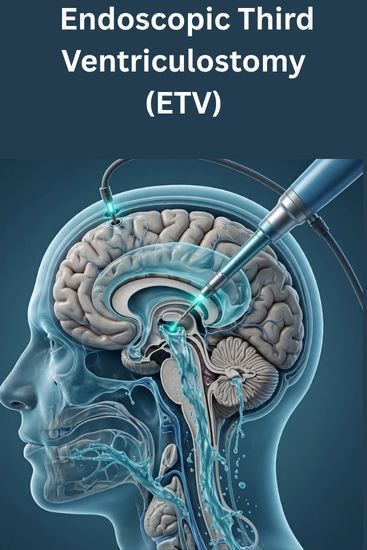
Endoscopic Third Ventriculostomy (ETV) is a minimally invasive neurosurgical procedure used to treat selected cases of hydrocephalus.
During ETV, a neurosurgeon uses a thin endoscope equipped with a light and camera to access the brain's ventricular system. A small opening is created in the floor of the third ventricle, allowing CSF to bypass an obstruction and flow into the spaces surrounding the brain, where it can be reabsorbed.
Unlike shunt surgery, ETV does not require a permanent drainage tube to be placed from the brain to another part of the body.
Why is ETV Performed?
Normally, cerebrospinal fluid circulates through the brain and spinal cord and is continuously produced and absorbed. When its normal flow becomes blocked, CSF can accumulate inside the ventricles and lead to hydrocephalus.
ETV may be considered when hydrocephalus is caused by an obstruction in the normal CSF pathway. However, ETV is not suitable for every patient with hydrocephalus. The decision depends on factors such as the cause and type of hydrocephalus, age, imaging findings and overall clinical condition.
How Does ETV Work?
The basic principle of ETV is to create an alternative pathway for CSF.
In simple terms:
CSF flow is blocked → fluid builds up → pressure increases → ETV creates a new pathway → CSF can flow through the new opening.
This can help reduce the pressure associated with obstructive hydrocephalus.
Who May Be Suitable for ETV?
ETV may be considered for patients with certain forms of obstructive hydrocephalus, particularly when an obstruction prevents normal CSF circulation.
Before recommending ETV, the neurosurgical team may evaluate:
- Symptoms and neurological examination
- Brain MRI or CT findings
- Location and cause of the CSF blockage
- Age and overall health
- Previous hydrocephalus treatment or shunt surgery
- Whether CSF is likely to circulate adequately after the procedure
Brain imaging such as MRI or CT plays an important role in evaluating hydrocephalus and enlarged ventricles.
What Happens During ETV Surgery?
ETV is performed under anaesthesia.
The neurosurgeon generally:
- Makes a small opening in the skull.
- Introduces a neuroendoscope into the ventricular system.
- Uses the camera to identify the third ventricle and surrounding structures.
- Creates a small opening in the floor of the third ventricle.
- Allows CSF to pass through the newly created pathway.
- Removes the endoscope and closes the surgical opening.
The exact surgical approach varies according to the patient's anatomy and the underlying cause of hydrocephalus.
Benefits of Endoscopic Third Ventriculostomy
For appropriately selected patients, ETV can offer several potential advantages:
- Creates a natural alternative pathway for CSF circulation
- Avoids implantation of a permanent shunt system
- Uses a minimally invasive endoscopic approach
- May reduce dependence on shunt hardware
- Can provide effective treatment for selected cases of obstructive hydrocephalus
However, the expected benefits vary from patient to patient, and ETV is not automatically a better option than shunt surgery. A neurosurgeon needs to determine which treatment is appropriate for the individual patient.
Possible Risks and Complications
As with any brain surgery, ETV has potential risks. These may include:
- Bleeding
- Infection
- Injury to nearby brain structures
- Blood vessel injury
- Changes in neurological function
- CSF leakage
- Failure of the procedure
- Closure of the opening created during ETV, which can cause hydrocephalus symptoms to return
An ETV opening can close after surgery, sometimes requiring further treatment.
Recovery After ETV
Recovery varies depending on the patient's age, medical condition and reason for surgery.
After the procedure, the medical team monitors the patient for neurological changes, headache, vomiting, vision problems and other symptoms. Follow-up appointments and imaging may be recommended to assess the patient's recovery and CSF circulation.
Patients and caregivers should follow the neurosurgeon's instructions regarding medicines, activity, wound care and follow-up visits.
ETV vs Shunt Surgery
| ETV | Shunt Surgery |
|---|---|
| Creates an alternative pathway for CSF | Uses a tube to drain CSF to another part of the body |
| Does not require permanent shunt hardware | Requires an implanted shunt system |
| Suitable only for selected patients | Used for a broader range of hydrocephalus cases |
| The ETV opening can sometimes close | Shunts can malfunction, become blocked or infected |
The choice between ETV and shunt surgery should be made after detailed neurological and imaging evaluation.
Frequently Asked Questions
1. Is ETV suitable for every hydrocephalus patient?
No. ETV is appropriate only for selected patients. The type and cause of hydrocephalus, imaging findings and individual patient factors are important in deciding whether ETV is suitable.
2. Is ETV a minimally invasive procedure?
Yes. ETV is performed using a small endoscope inserted through a small opening in the skull.
3. Does ETV require a permanent shunt?
No. ETV creates an alternative pathway for CSF and does not require a permanent shunt tube.
4. Can hydrocephalus return after ETV?
Yes. In some patients, the opening created during ETV may close, causing CSF circulation problems and recurrence of hydrocephalus symptoms.
5. Which specialist should I consult for hydrocephalus?
A neurosurgeon can evaluate hydrocephalus, review brain imaging and determine whether ETV, shunt surgery or another treatment is appropriate.
When Should You Consult a Neurosurgeon?
Persistent or worsening symptoms such as severe headache, repeated vomiting, vision changes, balance problems, unusual sleepiness, confusion or neurological changes should not be ignored.
Early evaluation can help identify the underlying cause and determine the appropriate treatment.
Expert Neurosurgical & Neurological Care at AIMS Hospital, Dombivli
AIMS Hospital, Dombivli provides Neurology and Neurosurgery services for brain and spine conditions, supported by a multidisciplinary team and modern diagnostic and treatment facilities.
The team includes Dr. Ravi B. Sangle, Neurosurgeon, who provides neurosurgical care for conditions including hydrocephalus, along with Dr. Rahul Jankar, Neurophysician, who specialises in the diagnosis and medical management of neurological conditions.
If you or your family member has been diagnosed with hydrocephalus, consult a qualified neurological or neurosurgical specialist for a detailed evaluation and personalised treatment plan.
Dr. Rahul Jankar
Neurophysician
Dr. Ravi B. Sangle
Neurosurgeon
Conclusion
Endoscopic Third Ventriculostomy (ETV) is an important minimally invasive treatment option for selected patients with obstructive hydrocephalus. By creating an alternative pathway for cerebrospinal fluid (CSF) circulation, ETV can help relieve pressure caused by fluid buildup in the brain.
However, ETV is not suitable for every patient. A detailed evaluation, neurological examination, and appropriate brain imaging are essential before deciding on the most suitable treatment.
If you or your loved one has symptoms or has been diagnosed with hydrocephalus, consult a neurosurgeon or neurophysician for timely evaluation and personalised treatment at AIMS Hospital, Dombivli.
ABOUT US
About AIMSDirector's Message
Vision & Mission
Accreditations
Awards & Accolades
Our Network
Phone Directory
Scan/Click For Location



Designed by Web Creations 2022. All rights reserved.
Leave a Comment